
A transaction can be perfectly signed, confirmed on-chain, and still be a financial mistake. That is the counterintuitive starting point for evaluating a DeFi wallet. The blockchain may execute exactly what the user authorised, even when the interface was misleading, the approval was excessive, or the wrong network was selected. For users in Germany and across the wider European DeFi community, the practical question is therefore not simply how to herunterladen, or download, Rabby Wallet. It is whether the wallet helps convert opaque smart-contract activity into something a person can inspect before committing funds.
Rabby Wallet is designed around that problem. It is a non-custodial wallet for Ethereum and other Ethereum Virtual Machine (EVM) networks, developed by DeBank, with transaction simulation, security warnings, automatic network selection, and broad multi-chain support. Those features can reduce avoidable errors. They do not eliminate the need for judgement, and they do not turn a risky protocol into a safe one. The distinction matters: a wallet is an inspection and signing tool, not an insurance policy.
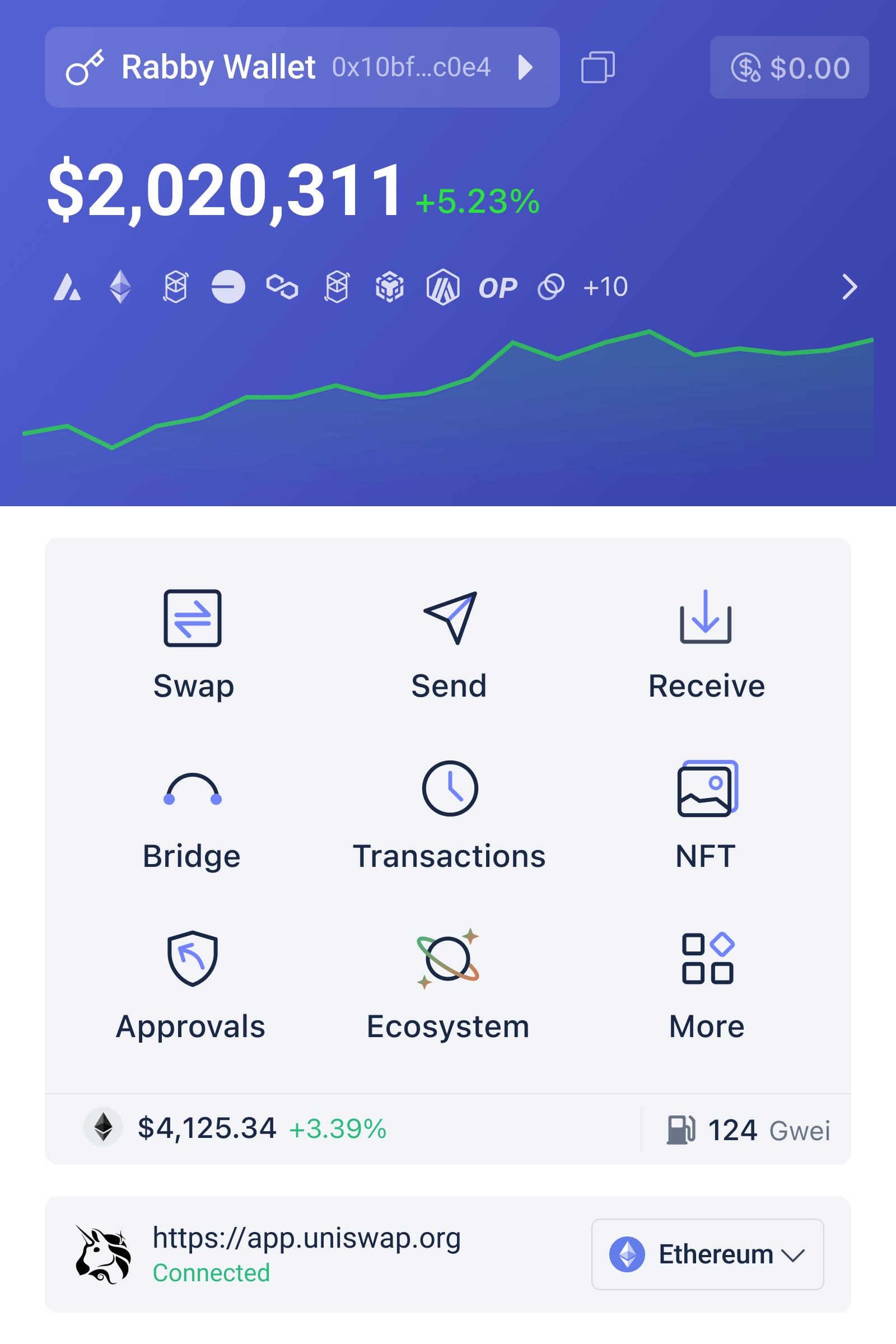
A concrete case: the bridge that looked like a simple transfer
Imagine a user holding USDC on Base who wants to move funds to Arbitrum. In a conventional mental model, this sounds like a transfer from one address to another. In practice, a bridge transaction may involve contract calls, token approvals, routing services, and a destination-chain action. The user may be interacting with several pieces of infrastructure even though the screen presents one button labelled “Confirm”.
Rabby’s transaction simulation is valuable because it attempts to show the expected changes in token balances before signing. Instead of relying only on raw calldata or a long hexadecimal address, the user can inspect what should leave the wallet and what should arrive. The same principle applies to swaps, lending interactions, liquidity deposits, and other DeFi actions. A useful simulation is not merely a technical preview; it is a translation layer between smart-contract execution and human financial reasoning.
This creates a sharper mental model of security. The important question is not “Does Rabby approve this transaction?” It is “Does the simulated outcome match my intention, and is the underlying application trustworthy enough to use?” If a user intends to swap a modest amount of one token for another but the preview indicates a large asset outflow, an unexpected approval, or an unfamiliar destination, the discrepancy is a reason to stop. The wallet has not prevented every danger, but it has made an otherwise hidden mismatch visible.
What transaction simulation can—and cannot—prove
Simulation is often misunderstood as a guarantee. It is not. A pre-signing simulation estimates how the transaction is expected to behave under the available state and execution conditions. Blockchain state can change between simulation and confirmation. Prices can move, liquidity can disappear, a protocol can behave differently under a changed block context, or an application can direct the user toward another signature after the first step. A simulation also cannot establish that a contract is honest, economically sound, or immune to future exploitation.
There is a further boundary condition around approvals. An “infinite approval” gives a contract permission to spend a token on behalf of the wallet up to a very large allowance. Rabby’s security engine can warn about such risks, as well as signals associated with phishing, known hacks, or suspicious addresses. That warning is useful, but the user still has to decide whether a limited approval, a separate wallet, or no interaction at all is appropriate. Warnings are decision support, not a substitute for understanding permissions.
The same caution applies to bridges. Rabby can integrate bridge routes, including services such as LI.FI, and it can make cross-chain movement more convenient. Convenience may also compress several risks into one interface: smart-contract risk, liquidity and route risk, destination-chain risk, and the possibility of selecting the wrong asset representation. A cleaner user experience can reduce operational mistakes while making the underlying complexity less visible. Serious users should treat the preview as the beginning of inspection, not its conclusion.
Why Rabby is attractive for multi-chain users
Rabby supports more than 140 EVM-compatible blockchains and networks, including Ethereum, Polygon, Arbitrum, Optimism, Avalanche, Base, and BNB Chain. For a user moving regularly between ecosystems, automatic network switching can remove a common source of friction. When a decentralised application requests a particular network, Rabby can recognise the requirement and switch accordingly rather than forcing the user to adjust the chain manually.
That feature is operationally useful, but it deserves a skeptical reading. Automatic switching reduces the chance of submitting a transaction on the wrong chain; it does not confirm that the dApp itself is legitimate. A malicious or misleading site may still request access to an unsafe contract. In other words, network selection and application identity are separate questions. Users should verify the dApp domain through a trusted route and read the asset and permission changes shown by the wallet.
Rabby also includes a swap aggregator that can compare routes involving decentralised exchanges such as Uniswap and 1inch. The stated objective is to seek competitive pricing while limiting slippage, meaning the difference between the expected and executed exchange rate. Yet the best quoted route is not automatically the safest route. Smart-contract exposure, liquidity depth, price impact, and token quality remain relevant. An aggregator optimises a route according to available parameters; it cannot know whether a newly issued token has a sound economic design.
For users who operate across chains, the Gas Account function may solve another practical problem: paying network fees in stablecoins such as USDC even when the native token of the selected chain is absent. This can be particularly convenient during a first interaction with a network. It also changes the user’s dependency structure. The fee is no longer managed only through holding the native asset, so users should understand the service conditions and execution path rather than assuming that stablecoin gas is universally available in every situation.
Downloading safely is part of the security model
The safest download process begins with source verification, not with a search-result click. Users should obtain the official browser extension or application through a trusted project route, check that the browser is Chrome, Brave, or Edge when using the extension, and be cautious with similarly named clones. For readers who want a starting point, the rabby wallet extension resource can help orient the installation process. The link itself should not replace independent verification of the publisher, permissions, and download environment.
Because Rabby is non-custodial, private keys are stored locally on the user’s device rather than sent to Rabby’s servers. This removes one class of counterparty dependence, but it transfers responsibility to the user. A compromised computer, malicious browser extension, exposed recovery phrase, or unsafe backup can still lead to loss. The phrase “non-custodial” describes who controls the keys; it does not mean that the keys are automatically protected from every local threat.
For larger balances, hardware-wallet compatibility with Ledger, Trezor, and OneKey offers a stronger separation between transaction review and key use. The hardware device can help keep the signing key isolated, while Rabby provides the interface and transaction context. This is a meaningful defence-in-depth arrangement, although it still depends on the user checking what is displayed and approving the correct action. A hardware wallet can protect a key from remote extraction; it cannot make a deceptive transaction economically harmless if the user confirms it.
Myths, trade-offs, and a practical decision framework
One common myth is that a wallet provider must be able to create or alter transactions in order to improve the user experience. Rabby’s stated architecture is different: it does not independently create or change the user’s transactions, and core signing functions can remain usable even if Rabby services are unavailable. This backend independence is valuable because it reduces reliance on a central service for the act of signing. It does not remove reliance on blockchains, dApps, RPC infrastructure, bridges, or the device on which the wallet runs.
Another myth is that open source means automatically secure. Rabby’s software is released under the MIT licence, allowing community members to inspect and review the code. That improves transparency and makes independent scrutiny possible. It does not prove that every version is free from vulnerabilities, that every dependency is harmless, or that users are running an authentic release. Open source is an accountability mechanism and an opportunity for review, not a certificate of safety.
A reusable checking method is to separate a proposed interaction into four questions. First, what asset and amount are expected to leave the wallet? Second, what asset and amount should return, and on which chain? Third, what permissions are being granted beyond this single action? Fourth, which risks remain outside the wallet’s view, including protocol governance, bridge design, token economics, and changes in market conditions? If the simulation cannot answer the first two questions clearly, or if the third reveals broad permissions, pausing is usually more rational than chasing a marginally better rate.
Rabby Points, earned through activities such as swaps, gas funding, or referrals, may add a loyalty layer to the product. That can encourage experimentation, but incentives can also distort attention. A points programme should never outweigh the value at risk in a transaction. For a security-focused user, the correct order is risk assessment first, execution convenience second, and rewards last.
What to watch next
Recent project messaging presents Rabby as a broad wallet for Ethereum and EVM activity, with emphasis on speed, security, and multi-chain use. The meaningful development signal is not the slogan itself but the direction it implies: as more DeFi activity spans networks, wallets are likely to compete increasingly on interpretation, simulation, and workflow design rather than on simple key storage alone. If that trend continues, the quality of warnings and the clarity of transaction previews will become more important than the number of supported chains.
The open question is whether better interfaces can keep pace with increasingly composable DeFi transactions. A preview is most useful when it remains understandable as calls become nested, cross-chain, and state-dependent. Users should therefore judge a wallet not by whether it displays a reassuring colour or a long list of networks, but by whether it helps them detect a mismatch between intention and execution. That is the durable value of transaction simulation: not certainty, but better-informed refusal when the proposed action does not make sense.
Frequently asked questions
Is Rabby Wallet safer than MetaMask?
It is better understood as an alternative with a strong emphasis on multi-chain DeFi usability, transaction simulation, and security warnings. Whether it is safer in a particular situation depends on the user’s device, the dApp, the contract, the permissions requested, and the quality of the user’s review. No wallet interface can remove smart-contract or phishing risk entirely.
Does Rabby’s transaction simulation guarantee that a transaction is safe?
No. It shows the expected balance changes and can expose inconsistencies before signing, but it cannot guarantee honest protocol behaviour, future security, stable market conditions, or a safe bridge route. Treat it as an inspection aid. Confirm that the simulated outcome matches your intention, then assess the application and permissions separately.
Can I use Rabby without holding the native gas token?
In supported situations, Rabby’s Gas Account can allow fees to be paid with stablecoins such as USDC across networks. Availability and conditions may depend on the relevant service and network, so users should verify the details before relying on it for a time-sensitive transaction.